Having landed in Delhi to explore the best of the capital, our fascinating Spiritual India Tour whisks you to the banks of the Ganges in the sacred city of Varanasi. The ghats – hundreds of stone steps flanking the riverbank – are an incredible sight, particularly at sunrise when thousands of pilgrims bathe in the spiritually cleansing waters. From Varanasi, fly to Agra: home of the world’s favourite monument to love, the Taj Mahal. Next, you’ll continue to the Pink City of Jaipur, in the heart of Rajasthan. The charming Samode Haveli will be your base while exploring highlights such as Amber Fort, the City Palace Museum, and the Hawa Mahal.
You’ll then board a flight up to Amritsar, home to the incredible Golden Temple and the most revered site in the world for Sikhs. The final stop on your spiritual India tour will be Dharamshala. His Holiness, the 14th Dalai Lama, resides here in exile, where Tibetan Buddhists have settled and built numerous monasteries and temples.
No two places on this unusual tour are alike. Together, they span many centuries of Indian history and form the backdrop to landmark events such as the birth of Buddhism, Mughal invasion and rule, epic Rajput battles and British imperialism. Our Spiritual India Tour is designed to give you an idea of what’s possible and is simply a starting point when crafting your tailor-made journey.
Day 1
Arrive in Delhi (stay at The Claridges, Delhi)
Your spiritual India tour begins at Delhi airport. After landing, a member of our team will be waiting to welcome you in the arrivals area and accompany you to
The Claridges. The Claridges is a great 4* hotel with character. This hotel blends old world charm with modern facilities while being close to the main sites and shopping areas. The charming lobby is reminiscent of the 1920s, while the guest rooms are comfortable yet contemporary. The best thing about The Claridges, we feel, is the fantastic selection of in-house restaurants.
Dhaba, the northwest frontier restaurant, has a rustic Punjabi menu and is always popular.
Sevilla, the Mediterranean garden restaurant, has excellent food and a romantic ambience.
Pickwicks, the all-day dining restaurant, is ideal for breakfast or a light bite.
The rest of the day, if any, is yours at leisure. Depending on how early in the day you arrive, you can let us know anytime if you’d like to begin exploring this afternoon. Your chauffeur is always on hand, and we’re only a quick call away on your complimentary mobile phone (or WhatsApp, if you prefer).
Day 2
In Delhi
A privately guided tour of the capital begins in bustling Old Delhi. You’re whisked through Chandni Chowk’s souk-like bazaars on a rickshaw ride, followed by the Jama Masjid, India’s largest mosque, built in the 17th century by the same Mughal emperor who constructed the Taj Mahal. In the afternoon, we recommend continuing to India Gate, Humayun’s Tomb and the Lotus Temple. The sights we’ve proposed here are merely a suggestion. You’re welcome to tweak the schedule in advance with our specialist or on the day with your guide.
Day 3
Fly to Varanasi (stay at BrijRama Palace, Varanasi)
Today, on your spiritual India tour, you’ll board a direct flight to Varanasi for a two-night stay at
BrijRama Palace. Resting on the banks of the holy river Ganges on one of Varanasi’s 87 ghats, BrijRama Palace is a luxury hotel with character and perfect for those that want to be close to the heart and soul of this deeply spiritual city. There are few places on earth quite like Varanasi, so make sure you set aside some time to head to the rooftop and soak up its incredible and unique atmosphere.
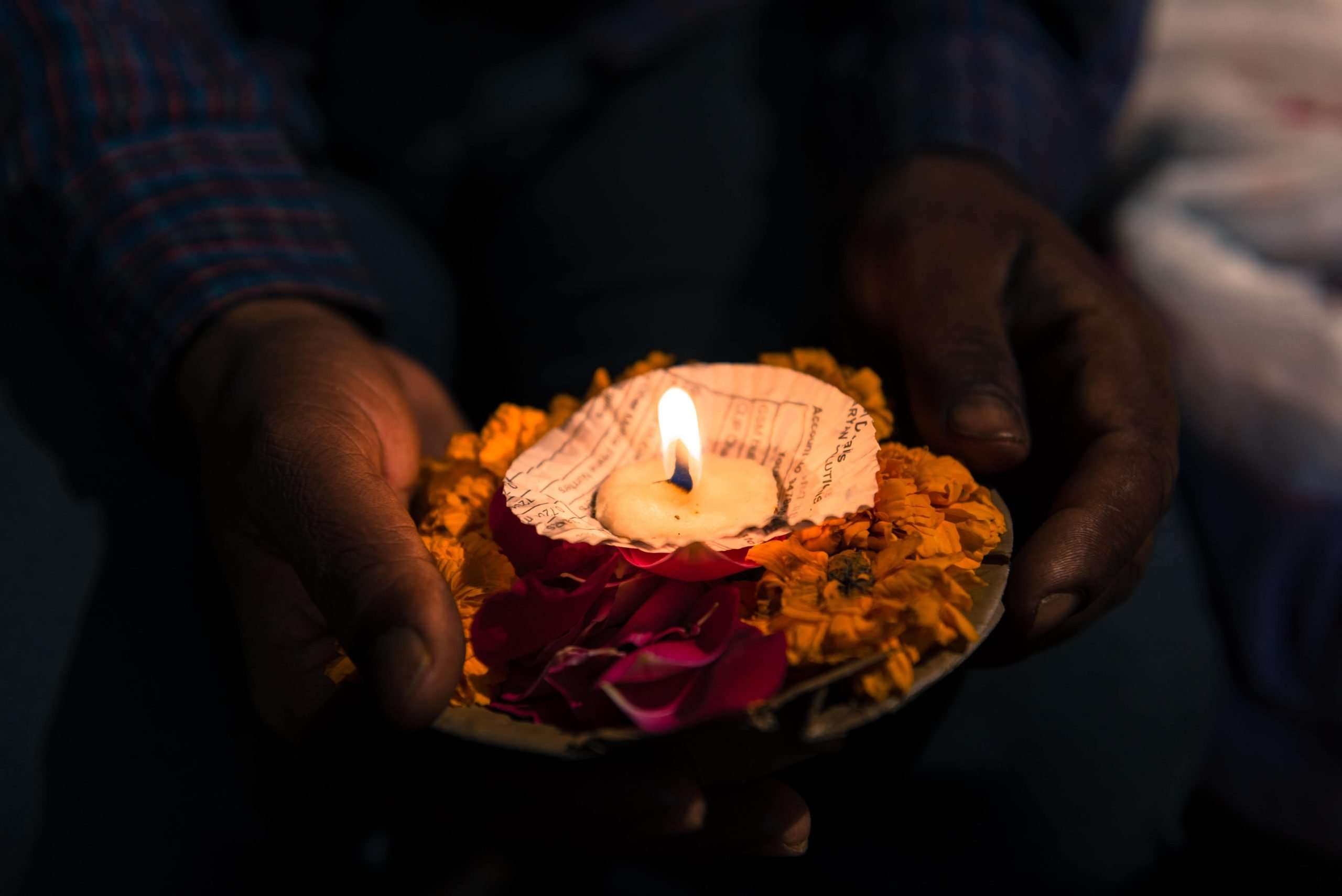
Some of our guests appreciate and prefer the peace and tranquillity of the 5* Taj Nadesar Palace. It’s away from the river, amongst beautiful gardens. Its sister hotel, the 4* Taj Ganges, is on the same grounds for something more modest. Later today, you’ll be met by your experienced local guide for a tour of the Ganges and its ghats by boat, culminating with the evening aarti ceremony. These aged ceremonies have changed very little over hundreds and hundreds of years. The smell of sandalwood and incense swirls around while the sounds of prayer chanting and clashing symbols rise to a crescendo. Hundreds of little oil lamps twinkling on the river are a pretty sight.
Day 4
In Varanasi
Rise early and return to the Ganges this morning for a sunrise boat ride. A sunrise boat ride is a highlight of your spiritual India tour when a soft light bathes the temples along the riverfront. The people of Varanasi trickle out of the labyrinthine lanes and head for the ghats at dawn. Later, visit Sarnath (where Buddha preached his first sermon after enlightenment) and the old city – a maze of streets and alleys crammed with derelict palaces, homes, and hundreds of temples and shrines. Here you’ll see funeral processions, cows and goats munching on whatever they can find! You’ll also explore a winding lane known as Vishwanath Gali, lined with many shops selling all manner of religious objects. It leads to the city’s principal shrine, the Vishwanath Temple.
Day 5
Fly to Agra (stay at Trident, Agra)
Board a direct flight to Agra this morning. When arriving in Agra, the rest of the afternoon is free to do your own thing. Set amidst beautiful gardens and only a few minutes drive from the Taj Mahal, the
Trident is built of red stone reminiscent of the Mughal era, designed around a landscaped central courtyard with a swimming pool, gardens and fountains. There is somewhat of a corporate feel, perhaps as the hotel also caters to business clients, but Agra is devoid of good character properties. With that in mind, we find the Trident offers excellent value and superb service.
One night in Agra is sufficient to do justice to the Taj Mahal, instead of the two we’ve suggested (in which case, you’d visit the monument this afternoon or at sunset). Two nights will afford a more relaxed pace, but if you prefer a speedier schedule, you’ll be happier with one. We can discuss this together once you get in touch.Day 6
In Agra
Your guide will introduce you to the highlights of Agra, taking in the fort, Itmad-ud-Daulah and – of course – the magnificent Taj Mahal.
Day 7
Agra to Jaipur (stay at Samode Haveli, Jaipur)
This morning, you have the option of a sunrise return to the Taj Mahal if you fancy. After breakfast, we’ll drive you to the Pink City of Jaipur. On the way, Fatehpur Sikri is an interesting place to stretch your legs with a guided tour (Fatehpur Sikri is a 15th-century Mughal court that Emperor Akbar abandoned after just 14 years). When arriving in Jaipur, our representative will be waiting to welcome you at
Samode Haveli, a quirky heritage hotel tucked away in a corner of Jaipur, originally built for a prime minister of the royal court in the mid-19th century.
Day 8
In Jaipur
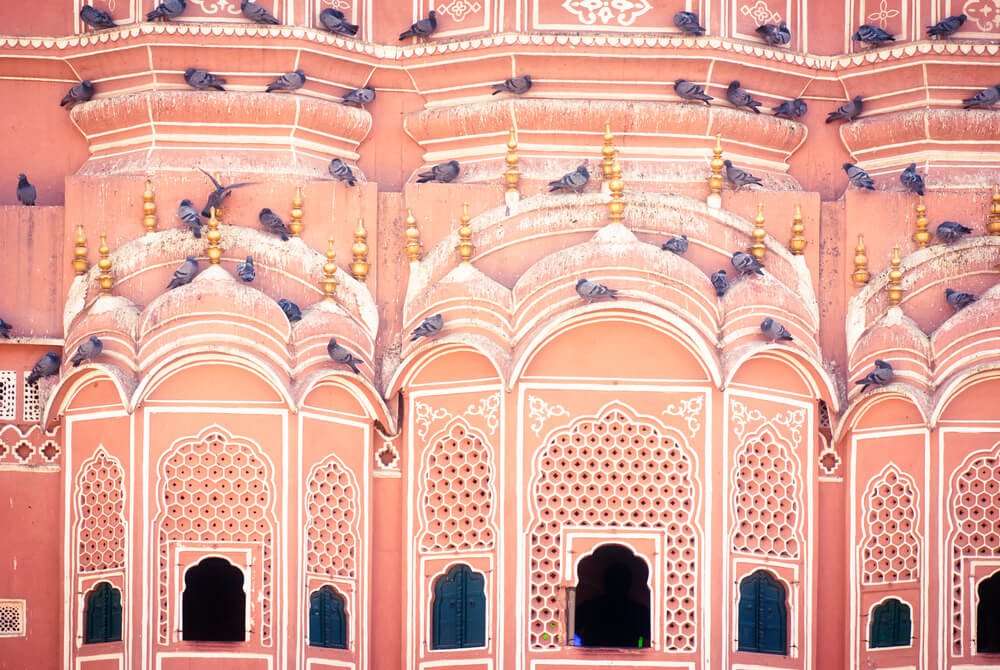
Today, you’ll be exploring the best of the Pink City on a guided tour. Jaipur is, for many, quintessential India at its best: expect a cacophony of sights and sounds, from splendid forts and glittering palaces to sauntering camels and brightly painted elephants, twirling moustaches and hot pink saris! Highlights you’ll take in include Amber Fort, the City Palace, Hawa Mahal (aka the Palace of Winds), the Jantar Mantar Observatory, and the Jal Mahal water palace.
Day 9
Jaipur to Amritsar (stay at Ranjit's Svaasa, Amritsar)
Much of the day is free to relax and enjoy the hotel, or explore further on your own – your chauffeur’s always available. You might like to take this opportunity to browse for interesting souvenirs in Jaipur’s famous markets and emporiums.
(When it comes to shopping, Jaipur has something for everyone: from elegant textiles to kitschy wooden camels, even the most frugal visitor is likely to leave the Pink City with one or two pieces tucked in their case! For a souvenir with local fair, we recommend a piece of semi-precious jewellery or blue pottery).
The next stop on your Spiritual India Tour is Amritsar, and you’ll get there this evening on a short, direct flight. Founded in 1577 by the fourth Sikh guru, Amritsar is home to Sikhism’s holiest shrine, the spectacular Golden Temple. Upon arriving, there’ll be the chance to freshen up at Ranjit’s Svaasa. This 250-year old haveli is now a family run small boutique hotel in the heart of the city, owned by interior decorator Rama Mehra. Two restaurants are serving a wide range of options from Lebanese to Chinese, and, of course, Punjabi favourites. Alternatively, you may prefer the Hyatt or the Taj Swarna. Both are amongst the most comfortable hotels in the city and offer all the mod-cons expected of a high-class hotel. Those who’re seeking charm, heritage and an Indian feel will be happier at Ranjit’s Svaasa, while those who value a big comfy bed and 5* facilities would prefer the Hyatt or Taj Swarna.
Later this evening, you’ll be met by your guide to explore the spectacular Golden Temple at night during the ‘Putting to Bed’ ceremony. A unique and colourful ceremony, this daily ritual of putting the Holy Scripture to bed is a sight not to miss on a visit to Amritsar. The temple is home to the Adi Granth or Original Holy Book, a collection of hymns of the great saints. The book is a focus of devotion, and during the day is kept in the Harmandir Sahib. It is returned to the Akal Takht every evening around 9.15 pm in winter and 10.15 pm in the summer. The Putting to Bed ceremony was the highlight of our recent stay in Amritsar. You may like to read about it by clicking here.
Day 10
In Amritsar and Wagah
Return to the Golden Temple this morning for a more thorough exploration. Your guide will show you around the main area of the temple and explain the history and layout. In the vast dining halls, all visitors, regardless of their religion, are invited to eat together. Perhaps the most incredible part are the kitchens run by volunteers; you will see vast cauldrons full of
dhal and groups of ladies rolling out
chapattis. Meanwhile, the noise in the background is the endless washing of plates.
Later, pay a visit to Jallianwala Bagh, a memorial to more than 1,000 demonstrators who were killed or injured when the British, under the command of General Dyer, opened fire on them in 1919.
To end the day, you’ll head out to Wagah, a village divided in two at Partition, where the daily closure of the border takes place with great pomp and ceremony. Indian border guards in khaki and Pakistani border guards in dark green march, bark orders and lower their respective national flags in a symbolic stand-off, watched by orderly crowds of thousands waving national flags. There is much partisan cheering in the grandstands as the gates clang shut for the night, formally opened the next day again.
Day 11
Amritsar to Dharamshala (stay at Chonor House, Dharamshala)
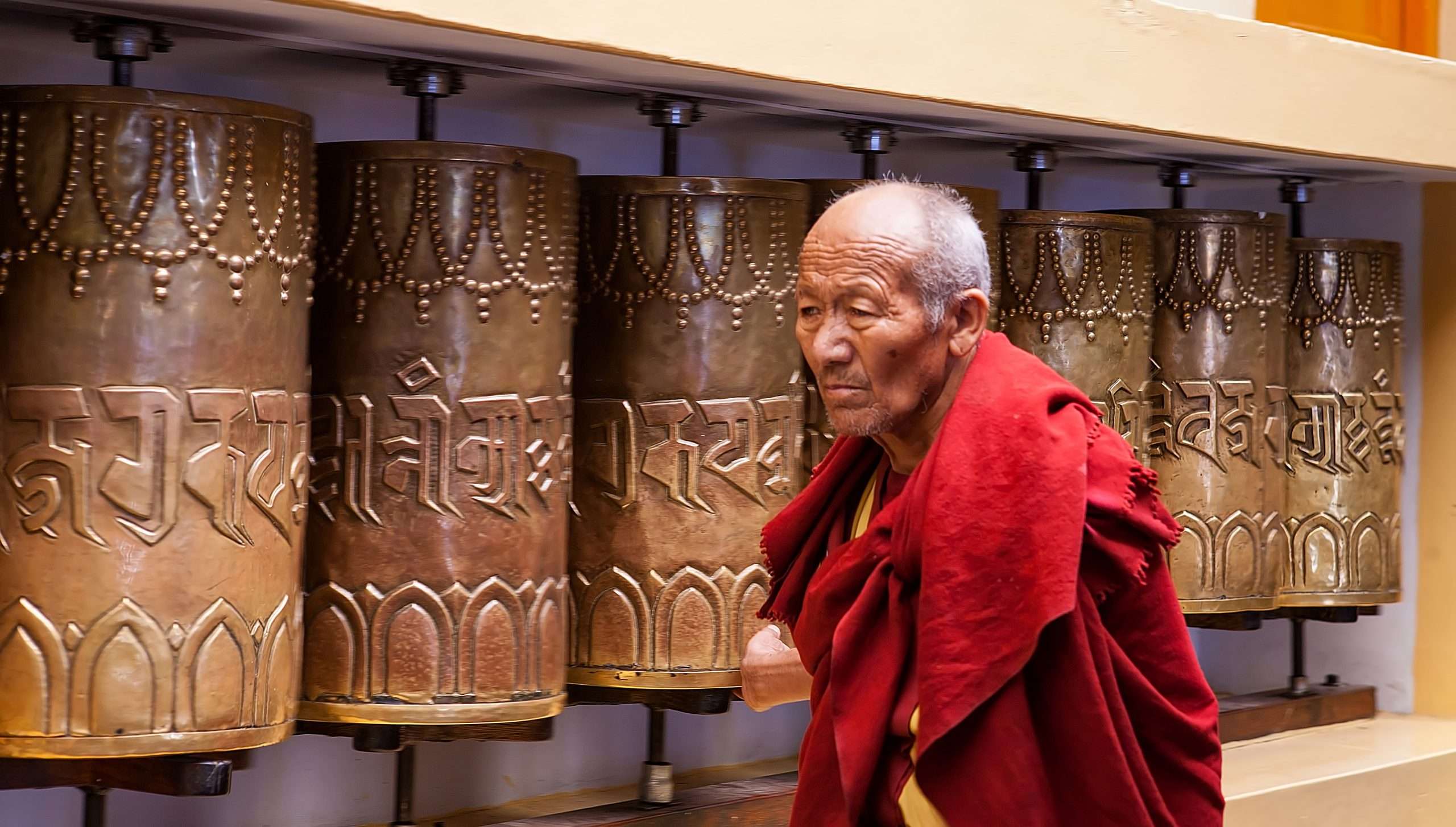
Your spiritual India tour today takes you to Dharamshala on a four-hour drive. It’s one of the 80 hill stations established by the British between 1815 and 1847. It has a spectacular setting, being close to the perennial snowline and built along a spur of the Dhauladhar range. It’s also home to His Holiness, the 14th Dalai Lama, who settled here following the Chinese invasion of Tibet in October 1959. Thousands of Tibetans have made McLeodganj their home, and therefore the town has a strong Tibetan influence – monks in deep red robes are a common sight.
Having arrived in Dharamshala, you’ll be met by your guide to explore the Norbulingka Institute, a centre established in 1988 to teach and preserve traditional Tibetan art forms. There is also a stunning temple here, the Deden Tsuglagkhang, a magnificent example of Tibetan religious architecture, displaying some of the most exceptional work done by Norbulingka artists. It’s the perfect place for prayer and reflection.
This evening, you’ll check in to the delightful Chonor House for a three-night stay. A small and friendly hotel of just 11 rooms, Chonor House has a wonderfully distinct Tibetan influence. The décor in each bedroom depicts one aspect of Tibetan life in bold murals. There are a library, comfortable lounge, and restaurant serving huge portions of delicious Tibetan, Indian and continental food (we recommend the Thenthuk, a traditional Tibetan noodle soup). Chonor House is not a luxury property, but its incredible energy and location – right opposite the Dalai Lama’s residence and monastery – make it an exceptional place.
Day 12
In Dharamshala and McLeodganj
Today, you’ll explore the highlights of Dharamshala and McLeodganj with your guide, visiting the Tsuglagkhang Temple, the Dalai Lama’s residence, the Tibet Museum, and the Namgyal Monastery. You may also like to visit the Church of St-John-in-the-Wilderness, one of the few remaining traces of McLeodganj’s days as a British hill station.
Day 13
In Dharamshala
Return to the Norbulingka Institute today for a full-day workshop in traditional Tibetan wood painting. Tibetan wood painting is a special technique of embossing, traditionally used to decorate furniture and the walls of temples. This technique of relief painting gives a three-dimensional look to the designs.
We recently took the class and loved it. You can read all about our experiences by clicking here.Day 14
Return to Delhi (stay at The Claridges, Delhi)
Today, you’ll be chauffeured to the airport to board a flight back to Delhi. When reaching Delhi, our representative will accompany you back to
The Claridges for your last overnight stay
(alternatively, if you’re up early tomorrow for your international flight, something near the airport such as the Trident or JW Marriott would be a wiser choice. We can discuss the options best suited to you once you get in touch). Day 15
Depart from Delhi
Your Spiritual India Tour concludes today as you’re chauffeured back to Delhi airport, in time for your onward flight. This additional stop is optional – you might prefer to connect from Dharamshala, especially if you have an afternoon or evening departure (most flights from Dharamshala operate in the morning). We’ll fine-tune this together to complement your wider arrangements.
2022/23 Guide price:
₹249,000 ($3,039; £2,669) pp
Our journeys are inclusive of accommodation with breakfast, a private car with driver throughout, experienced guides, internal flights, entrance tickets and excursions. In other words, we offer a seamless and hassle-free experience where the only thing you need to worry about is soaking up the sights and enjoying your fabulous hotels! This indicative cost is per person, based on a couple travelling between October 2022 and March 2023, sharing a double or twin room. The cost would reduce during the low-season months of April to September, while it will be noticeably higher during the peak Christmas and New Year period. We can arrange this itinerary at any time of the year, though it’s best between October and March.
Spiritual India Tour
we’ve described here is merely a starting point to share a flavour of the possibilities. Every aspect is flexible, from the hotels to the destinations to the length to the sightseeing. For example, you might like to explore Rajasthan further by including stops in Jodhpur, Udaipur and Jaisalmer, or take a Jeep safari in the jungle in Ranthambhore to spot wild Bengal tigers. Another possibility is to visit Khajuraho between Varanasi and Agra to take in the ancient carved temples. While we have suggested some of our favourite mid-range places to stay, this itinerary is 100% bespoke, and our specialist can help you select hotel options best suited to you. All our tours are private and tailor-made to complement your taste and interests. In essence, the itinerary described above is just a starting point, and together we can refine it into your ideal Indian experience. For more like this, you may find our suggested Golden Triangle with Varanasi tour inspiring (with which our extension to Amritsar pairs well), or our Luxury Tour of India: to the Golden Triangle & Beyond.